IMPRESSIONS OF PEOPLE
Impressions of people
I have never met
when they touch and connect
with my heart
I am moved by
what leaves an impression.
……………………………………………………………………………………
Key: matter in square brackets is the etymology.
ME = Middle English, MF=Middle French, OE=Old English, ON=Old Norse, L=Latin, OHG=Old High German, Gk=Greek. G=German, Hitt=Hittite, Russ=Russian, VL=Vulgar Latin
Etymology: the history of a linguistic form (as a word)
Impressions: [ME, impressen, from L impressus, pp. of imprimere from in- + premere to press] syn see IDEA
Of: [ME, off, of from OE; akin to OHG aba off, away, L ab from away, Gk apo] used as a function word to indicate a point of reckoning.
People: [ME, peple, from OF peuple, from L poplus]
I: [ME from OE ic; L and Gk ego, Hitt uk, G ich, Russ ja] one who is speaking or writing
Have: [ME haven from OE habben; haven to lift (see heave)] to hold in possession as property
Never: [ME from OE næfre from ne not + æfre ever] at no time, degree, under any condition
Met: past tense of Meet: [ME meten from OE metan akin to OHG muoz meeting] join, find contact, conjunction with another direction
When: [ME from OE hwanna, hwenne} just at the moment
They: [ME from ON their] people, used in a generic sense. characteristic of a whole group
Touch: [ME touchen, VL toccare to knock, strike a bell
And: [ME from OEakin to OHG unti] indicate connection or addition
Connect: [L conectere, connectere, from com- + nectere to bind]
With: [ ME, against, from, with, from OE akin to OE wither against} comparison or equality
My: [ akin to OE me ]
Heart: [ ME hert from OE heorte akin to OHG herza, L cord, cor-, Gk kardia] (1.) muscular organ, (2.) playing card, (3.) whole personality (4.),\ the emotional or moral not the intellectual
I: [ME from OE ic; L and Gk ego, Hitt uk, G ich, Russ ja] one who is speaking or writing
Am: [ ME from OE eom akin to ON em am, L sum, Gk eimi]
Moved: [ ME moven from MF monvoir]
syn: see ACTUATE, DRIVE, IMPEL
By: [ME from OE, akin to OHG bi, near. L ambi- on both sides, around, Gk amphi]
What: [ME from OE hwaet, ] as adj. expressing inquiry about the identity, nature, or value
Leaves: [ME leven from OE laefan akin to OHG version of leiben to leave, OE be lifan to be left over]
An: [ME from OE an one}
Impression:[ME, impressen, from L impressus, pp. of imprimere from in- + premere to press]
Note: Thus poem hinges on different meanings for the word impression. Also in a number of words there is a choice between a material meaning and a meaning that describes relational situations. I think in each case it is the relational emotive form that is used, example “moved” Not physically moved but emotionally moved. “Heart” not the muscular organ but the emotional or moral encounter
Meanings of impression:
1.) Stamping or pressing
2.) Imprint of the teeth used in dentistry
3.) Marked influence or effect on feeling, sense, or mind
4.) A single print or copy made through meeting of inked printing surface and the material being printed
5.) A usually indistinct or imprecise notion or remembrance
6.) An imitation of salient features in an artistic or theatrical medium
I wrote the poem to use meaning (1.) in line one and meaning (3.) in the last line.
Alternatively the last line could be meaning (5.)
or the poem could be stood on its head and the meaning for the first line could be (3.)
and the last line (1.)
IMPRESSIONS OF PEOPLE
impressions of people
noiseless shadows,
tickle my mind.
never met
but do not doubt
their existence.
just at the moment
they touch they bind
my heart
moved by what
leaves an impression.
printed into blank surface
poetry inked & stamp; pressed
words from another language
January 14, 2012
Elsmere, New York
Strangely enough this poem now describes the experience of making it. The way words from another person in a poem are also words from another language, from another people and both the person’s words and the people’s words make their impression. If read with enough force, a deep impelling stamp, not a brush of chalk to be quickly erased. The reading of the poem is perhaps the mechanism, the printing press itself, which doesn’t get mentioned in this poem.
I did this work as assignment for a writing workshop I am taking with Bernadette Mayer. The assignment was to take a poem and research every word. Then rewrite the poem.
----- Alan Casline
1/14/2012
Tuesday, January 24, 2012


Saturday, December 3, 2011
MY EZRA POUND EXPLORATION

I spent a few months exploring Ezar Pound for a Posey Cafe presentation. It gave me an over all sense of Pound's Cantos that I had not had before. I looked at only four of the Cantos which I picked because they grabbed me and led me to areas of my interest. I also wrote a bit about my backward travel from the Curriculum of the Soul to Ezar's epic.
going backwards to find Ezra Pound
a poet with an epic poem THE CANTOS
my poetic education through Albert Glover and Jack Clarke, edited and published
A Curriculum of the Soul
understood to be multi-authored time and history capturing like Homer
cause Homer wasn’t one guy and submerged egotism ownership
issues, issued forth
some impressive poets
my education being
neither Clarke or Glover wanting to say their “great project” was they were creating an epic
instead it was aim at the target without looking at the target
empting mind, knowing the target, arrow etc. (zen tricks)
Greek hubris hanging out there with speculation on ancient Greeks, speculation from scholarly sources
while contempory other poets happy enough to make them a target
Charles Olson gave a start with his outline or plan plus also
THE MAXIMUS POEMS
an epic poem I think most would agree
Maximus is not Charles Olson/Charles Olson is not Maximus
Olson uses Gloucester history, the lives of past and present Gloucester residents, geological history, and current civic events to anchor Maximus to Gloucester. Sometimes Maximus seems to represent all of Gloucester, and at other times, all of humankind.
--- Carl Carlsen – web-site: Poetry of Places in Essex County
I see Olson walking the streets of Gloucester
Just before or just after midnight
Streetlights on, lights on parking lots and fish-factory buildings, a few bars open
The wind is a sea-breeze, chill night light coat
Clanking sound muted from the harbor
Noises small ships make tugging on their anchoring cables
The hills have curved sections, ridges that ungulate but hold an altitude, rough, the heights
Streets that follow parallel to the shore, go up & down, the city streets
Cut by straight steep roads direct to dock areas
Merchants and old traders homes, substantial, brick-hard, timber-strong
Large man’s large strides, at a pace covers ground, sets a self-propelled wind to mix
With a stronger wind blows clouds high out to sea
PATERSON
an epic poem by William Carlos Williams I think most would agree
poem as a field of action, energy field ..new physics calls for new poetry
Williams sense of time as poetic meter
applied consciousness of social and physical environment & unconscious possibility
in PATERSON. 1940’s found reality in form of letters, historical accounts lifted whole
PATERSON’s poetic collage
poetry of spontaneous association
Pound, Williams, Olson
used compound ideogram
for poetic structure
“creating images”
--Daniel Belgard writes in The Culture of Spontaneity
Univ. of Chicago Press (1998)
“images not from analogy or metaphor
but through synecdoche and parataxis.”
synecdoche:
special for the general make the object the image my red wheel-barrow /the wear on my shoes
general for the special
my hat my house
complex of my thought
shelter of my knowledge
thin shelter from the Chinook knowing the price of milk/scanning groceries
specific reference shows greater larger
in Canto VII applied to leaders of Irish nationalism
The words rattle: shells given out by shells.
The live man, out of lands and prisons,
shakes the dry pods,
seed case sound from rattling seeds
shell as shell protects the kernel
nut gone loose inside shell
only this year’s food
fed no land or prison
escaped that
more dangerous without
parataxis:
act of placing side by side
Mountain Sky Bird poem title 1974
“goose feather bag chest backpack books clothes radio tape music candelabra” line from poem 2011
materials, side-by-side, without comment on the relations
parataxis a foundational element in the poetry of Wallace Stevens. Rae quotes Stevens in saying that parataxis offers an “ambiguity that is so favorable to the poetic mind.”
--Patricia Rae, in her essay “Bloody Battle-Flags and Cloudy Days: The Experience of Metaphor in Pound and Stevens"
Ezra Pound’s Canto LXXXI lines 34-36
sky’s clear
night’s sea
green of the mountain pool
connections left for reader
only seemingly disconnected fragments
without those connector words
like knife, pencil nub, shiny copper button, paint brush
all in a compartment
built into a desk drawer
Live man goes down into the world of the dead
Pound more alive than the rest of us
through “directed will”
moves “the outward crust”
of time, place
reveal past glories make a new age
not to destroy, clearing ground
mistake of Futurism, chrome hubcaps
mod use of words
like language stripped of prior meaning
- unrooted -
Dead and underworld of early CANTOS in their mythological place later
Pound’s contemporaries metaphorically dead
waking world with zombies populating
poetry is not entertainment pitched to the tune
of low and mid-brow culture –
poetry not fodder for the common people,
language charged with meaning to the utmost possible degree
Friday, September 23, 2011
Subject: Will Nixon blogs Christman and Casline

post on William Weaver Christman:Return of a Forgotten Poet
post of Trees by William Weaver Christman
post on Alan Casline, Watershed Poet

Saturday, April 30, 2011

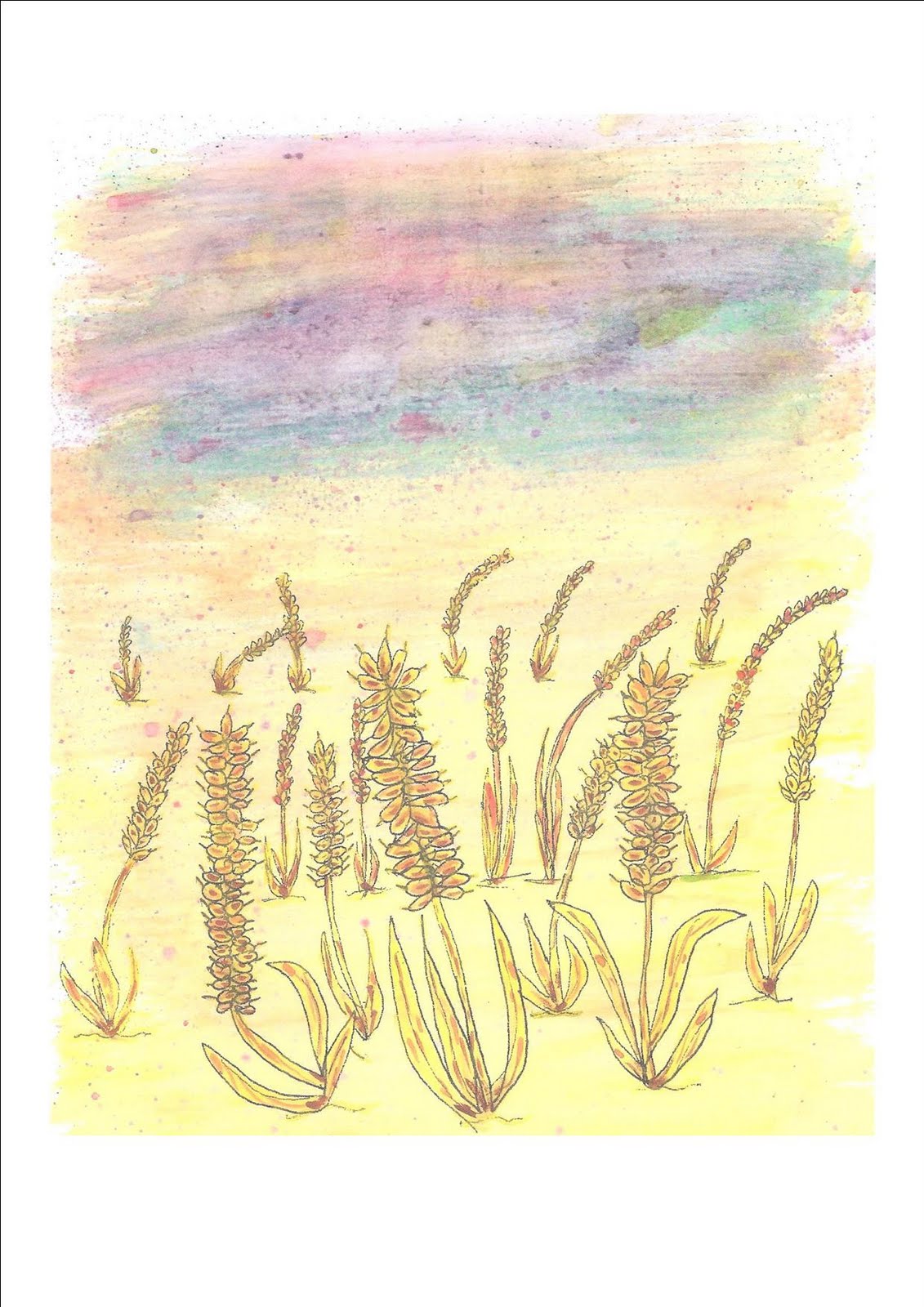
A small creek with sand and flat stone in dry season,
snow melt stirs and carries brown waters swiftly in front of me.
Someone has strung a rope from one bank to the other
leaving me to contemplate how deep the narrow crossing.
Angry river, holes sucking in, walls racing by
Still, footsteps in mud of cattle and people go in the water and come out the other side.
They are wet despite it being two days since the last rain.
I look up and down the road and see no one coming from either direction.
The morning sun doing nothing more then drive a chill wind.
There is I see a faint pathway that follows the river bank
its paltry impression tells me there is not much to merit a turn either up river or down
I look at my shoes choose their soaking over cold toes on slippery purchase.
Roll my pant legs up, grip the rope and travel its sway
placing each step at regular pace just ahead.
There are tiny, unforeseen slips at foot
where the rope steadies, takes a bit of weight
and rights the man.
The water that runs off (excepting that inside my shoes) is a torrent, a trickle, then wrung drops
as I twist the cloth to remove its bite.
Twist the water from my socks as well and go on with bare feet in wet shoes.
Late morning the sun warms the sand so I walk unshod.
Shoes tied together, their string thrown over my shoulder
This is the day I turn for the mountains.
Against their pull I had set my exile.
Far distant their snow-covered peaks catch light or hold dark.
All the turnings I had made away I could not shake them
as I could not shake the caress of my other ghosts.
Stubborn for any illusion of freedom as the slaver’s lash sends me on my way
condemned by the laws of the over rulers court.
I don’t think then what strange guarded gates lay in high pastures.
When I set out it was to live, to sing any song, yes beyond their laws and censure.
I look again at the high pass. Maybe there is a different land beyond?
Maybe there is some turn I cannot see that turns me back or causes me to no longer care?
Alan Casline
Exile poem #3
April 14, 2011
Elsmere, New York
Saturday, April 9, 2011
eerie from within radioactive Japan- raw video

seriously this is a raw video of a trip along roads to close into the area of radioactive reactors in Japan.
http://www.rawstory.com/rawreplay/2011/04/eerie-footage-from-inside-japans-radioactive-evacuation-zone/
not a disaster movie
not a road trip
no picnic either
Sunday, March 20, 2011
TEXT AS ART IN A COMPARTMENTAL MIND
I thought I'd send a few collage poems to, as it turned out, Nancy Klepsch the curater of a a show called TEXT AS ART held at The Arts Center of the Capital Region. I didn't have high expectations but thought, if they didn't have a lot of submissions maybe my collage poems would fit their criteria and I'd be included in the show. As it turned out the show was small with only seven pieces selected and I made the grade with a bit more RAPIDITAS and I'm told by Nancy exceptionalism (I never said my collage poems weren't good). We had the opening on February 28, 2011 in The Arts Center in Troy, New York. I have a compartmentalized mind. For example I have different publications and do books from my Benevolent Bird Press based on different sections of my thinking which often include different groups of people. Probably most people have different group mailing lists and here I separate even information about what I am doing or new discoveries...send my different arrows flying to hopefully receptive targets. I try to avoid the hive-mind and the blanket cover of "BIG EGO". The upshot of this is that after attending this TEXT AS ART event, I decided I need to start a new compartment/e-mail list. The show is now over but the effects of the show have the potential to go on. The Albany New York Region has a lot of practicing poets. I throw around the figure of 1000 and it is easily that if you consider the different venues, open mics, workshops, college programs, waitress who hand us doggeral written on napkins, the rappers and slam poets, the country music near-poets and the Irish... Experiencing Daniel Nester and Mary Kathryn Jablonski's contribution and reading on February 28th -- I had heard them both "feature read" in the area -- but the context and subject splash of this night just added something and made me think they and the other contributers and myself were held together in a special place. The other disparant souls brought together by Nancy Klepsh were by her design working through different media but the added on energy field of words/text and data rich surface made something different than Albany's 1000 poets all gathered in a single room. Examples: Susan Rivers * "Fabric Memories"; Sara Tack * motion typography; Mary Kathryn Jablonski * particitatory assemblage poem; Joelle Nadeau Hotaling * poster art; Daniel Nester * first-person conceptual performance and my collage poem.
Seeing is better than reading. I am really just writing this post so I can put up my photographs. The way blogger works if you click on any photo it will enlarge to full screen size. Help yourself!
 Mary Kathryn Jablonski work Quicksilver
 (L to R) Sara Tack, Mary Kathrym Jablonski and Daniel Nester
Nester at The Memoir Office
 Susan Rivers work Meet Bella
 Kate Laity work The Square Root of 1 is 1
 Alan Casline work Saddam Don't Like It
 Alan Casline at the Opening Feb. 28, 2011
Seeing is better than reading. I am really just writing this post so I can put up my photographs. The way blogger works if you click on any photo it will enlarge to full screen size. Help yourself!
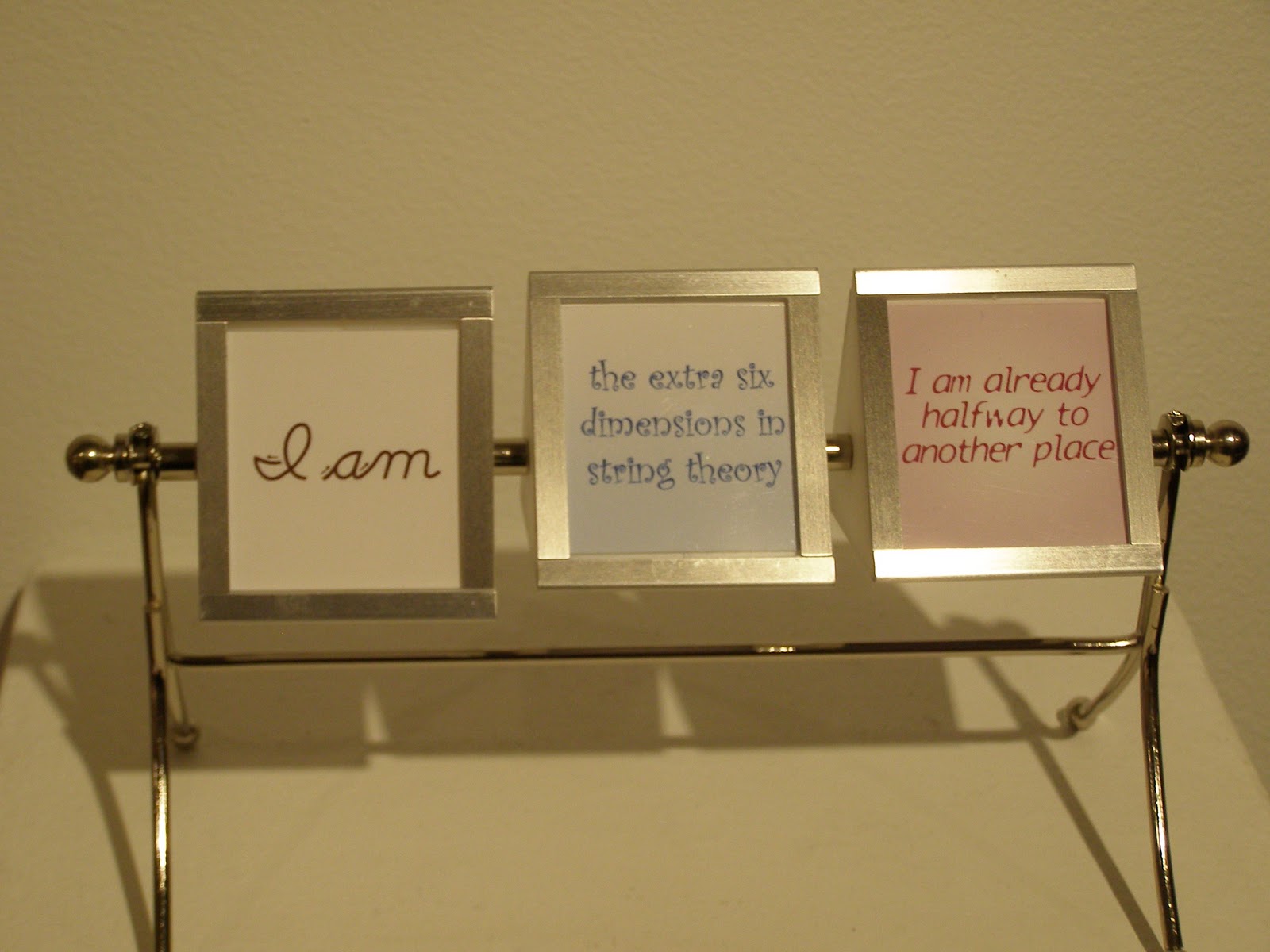

Nester at The Memoir Office


Wednesday, February 9, 2011
BERNADETTE MAYER: SNAKES AND ICICLES

Kinderhook Creek
It has been a great "old fashion" winter here in the northeastern woodlands. Last few winters have been too warm with little snow until February and March. Those late winter storms carry lots of moisture and are helpful for filling the streams but we haven't had a socked in storm piled on storm winter where the snow level goes up and down but never leaves until mud season finally arrives in more years then I can count. That's what we have this winter and despite the snow shoveling I think the earth is more comfortable covered under a blanket of snow and breathing cold air which translates to my comfort too. My daughter Liz gave me snowshoes and I have been watching the weather and snow conditions for the right days to head for the woods. I used to cross-country ski and for backyard trekking I know from experience some winters there are only a few perfect days and if you laze your way past them you are out of luck till next winter. Ever since I got the snowshoes I've been thinking about the hollow of land "cup of water" Tsatsawassa where Bernadette Mayer and Philip Good live. In early January I had found the book Mills on the Tsatsawassa (1983) by Philip L. Lord, Jr. in a bookstore in Saratoga Springs, N.Y.. It is a book I knew about because I researched the area as I wanted to understand the looping and winding of Kinderhook Creek and the confluence of other small tributaries that created the Tsatawassa "cup" but I never thought I'd actually see a copy for sale. When I did I bought the book for Bernadette and Phil. Now as I set out on my choosen perfect day, I was thinking it won't be a problem if they are home to be allowed to snowshoe down to the Kinderhook but just in case I brought a few trade goods. Besides the mills book, I had a bottle of wine and a set of the 2010 Benevolent Bird broadsides plus the mini-book Ten Thoughts About the Eternity of Day by Dennis Sullivan that I used graphics from the exterior plates of Gundestrup Cauldron on. The Cauldron is subject of a current obsession of mine as will be referred to later in this post when we get to the "snakes" part. Phillip was away at work but Bernadette made me welcome (you can't get that many visitors on that road in January). I did my snowshoe trek following animal tracks and staying up on the banks above the Kinderhook Creek.

snowshoe path
There was a layer of hard crust on top of about a foot of powder and on top of the icy crust was about ten inches of fresh soft snow from the last storm. The snowshoes cracked but did not break through the icy layer and the going was pretty easy--held up above the layer of deep snow. I turned up the Tsatsawassa Creek past a low area which showed signs of previous flooding and went on to where the road crossed above and climbed up the steep bank. I got my snowshoe caught under a layer of crust, fell, and had to back up and restart twice before I came out on the roadway again.

Bernadette Mayer January 2011
Back inside again, Bernadette and I fell into our conversation. It was talking about things like different strategies of insulation for which she encouraged me to take a trip to see the attic room, snow for snowshoeing and the need or not for ski poles when doing it. Also the history of the house (which was very interesting to me, twice a church for different congregations and then owned by a Rabbi -- when Bernadette moved in the rooms all had numbers on the doors and they would joke "I'll meet you in room 3 at 8:15")
 attic view
The topic we spent the most time talking about was snakes. It was the Gundestrup Cauldron that pointed me towards the Celtic two-headed snake which is found in the interior detail. Celtic warriors wore two-headed snake torques as armbands. Bernadette knew of the Celtic symbol but didn't know any particular myth or story. She thought that maybe the two heads got into arguments, they disagreed. I don't know why I would get interested in any subject having to do with snakes because they make me uneasy. As I told Bernadette, it is not the sight of a snake, I can look at a snake, watch a snake--it is the rustling, the movement sound that startles me, gives me the heebie-jeebies, makes me jump (supposed to be a survival instinct as old as upright man). She is not brothered by snakes but said she has a friend who also has a snake phobia and whenever the friend visits and they go for a walk, they see snake after snake after snake. The snakes showing themselves. Bernadette asked me if I thought there was a decline in the garter snake population. We both fond of these foundation and sun loving little creatures. My mother had names for favorites who lived in the loose limestone flowerbed walls my Dad hauled stone for and rebuilt every Spring after frost heaves. I said I didn't think there were less garters as I am still seeing them regularly and have a number of nice photos of garter snakes that I have taken in my own Normanskill Watershed. I'll have to research it. I know there is a world-wide problem with frog and other small reptiles "disappearing" to possible extinction and I've already got bees, herrings and brown bats on my watch list.


garter snake at Christman Preserve
It was kind of an abrupt change of topic and really it was cool to just shoot the breeze but I thought I should ask Bernadette something literary if I was going to go to the trouble of writing some of our conversation up and what she had to say was pretty smart. I said, "I've often stated the position that I would not change a word in one of my poems for the sake of a particular poetic form. There are many poets who do, who change the language to make it fit the requirement of a form." Bernadette Mayer said well it would depend on how much you liked that particular poetic form. She said she could do that, she could take a Bernadette Mayer poem and then write a second Bernadette Mayer poem with the same words but an entire different form and put them both out there side by side. She said she didn't see any reason why a poet couldn't just have one poem they had written in their lifetime and just continually write the poem again and again, each time using a different spacing, line breaks, placement on the page. Made me realize I was thinking of form too narrowly.
We talked some more about wintercold. She said, "Before you go I have to show you my icicle. I show it to everyone who comes and visits." Outside the small kitchen window a massive icicle flowed down. A distance from the side of the house with the lightcatcher still maybe a body length to go before it reached the ground. A great season for icicles as well as the deep snow.
Where had I learned of the Philip L. Lord book? I googled Tsatsawassa because I wanted to understand and draw a map of the different streams and waterways that came together to make the landscape so unique around Mayer and Good's neighborhood. There are not that many internet addresses that mentioned "Tsatawassa." as I told Bernadette. There should be one for the magazine THE TSATSAWASSANS she thought so I volunteered to put notice of it here. THE TSATSAWASSANS is edited by Bernadette Mayer and published by Mademoiselle de la Staples Press. There are still copies of ISSUE #2 available for $7.00 (I'd include a few more dollars for postage) I know blogs like this one have an international reach and it would be cool if this little notice generated some poet to poet exchange. One thing a magazine is about is the associations or poeticworld created in combination, all shaking and shining and emiting an energy field. Besides Bernadette Mayer poems in the magazine there are experiments and colloborations, shared compositions, rewritten poems, eight different poems from eight different poets about neutrinos, a superbowl poem by Mayer and Good (you get the idea). Philip Good, housemate amd major contributor (I think he drove to Staples), editor of Blue Smoke and wrote the Drunken Bees Poems is found in the magazine.

COVER: THE TSATSAWASSANS, ISSUE #2
PLUS:
Jack Collom--Colorado based with attachments with Naropa-- elder with a Selected Poems 1955-2000 and Exchange of Earth and Sky (2005)
Jamey Jones--Blue Rain Morning-- You-Tube Jamey Jones:The New York Poems
Laura Goldstein-- published ICE IN INTERVALS (2008)-- writer & text sound writer--Chicago
Bill Kusher--NYC poet--praised, was in Creeley edited Best American Poetry 2002
Jennifer Karmin-- multidisciplinary projects, poet, artist--founding member of public art group Anti Gravity Surprise, curates the Red Rover Series
Jason Morris--Vermont Native
Deborah Poe-- fiction editor for Drunken Boat--wrote Elements (Stockport Flats Press 2010)
Layne Browne--born 1966 in Los Angeles--flora/fauna/present.and Others
I notice Bernadette Mayer had a book Mutual Aid published by Mademoiselle de la Mole Press in 1985. I wonder what happened to that Mademoiselle? The 3rd issue of THE TSATSAWASSANS will be poets whose first name is Bill. Here is the opportunity to get ISSUE #2 pick it up while you can ( $7.00 ) at:
THE TSATSAWASSANS
53 Tasatsawassa Lake Road
East Nassau, NY 12062
USA
Tsatsawassa Creek and Bridge
Monday, January 24, 2011
UNLIKELY AS IT MAY BE

Paul Doty, who is one of the St. Lawrence County members of Rootdrinker Institute, has been doing a blog for a Friends of the Library group at St. Lawrence University in Canton, N.Y.. Unlikely as it may be, he just published my poem ON MY DESK AT COLLEGE IN 1973 (actually it makes sense for it to appear there.) I am curious to observe any reaction from the college community. Meanwhile, I think I have some kind of reverse energy going with Barbara Vink of the Thursday Night Poetry critique group that meets at the Voorheesville Library in Voorheesville, N.Y.. I brought this poem to the group to more or less show Barbara and the others a stretching of poetic form and to give the "is it or isn't it poetry" conversation another consideration from my work. Yet it seems that these experimental(or whatever you want to call them) poems find their own little homes. Somewhere I have the notes where I wrote down every object found in my backpack, either hitch-hiking or coming or going from Honolulu. Now I want to find that scrap as a follow-up. When I got to the blog, I was pleased to find posted the recording that Jason Crane and I did of Albert Glover's poetry reading at Caffe Lena. As I have been telling folks it was a "wish you could have been there" event and now it is available for listening to. Here is the link:
http://blogs.stlawu.edu/fodyll/2011/01/10/2011-starts-with-poetry/
My poem is just down the page with a January 24, 2011 publication date.

The poet Dennis Sullivan asked me, "What is it about Jason Crane that you like?" I said, "He reminds me of a young Dennis Sullivan." Which stopped the old Dennis Sullivan right in his tracks. Then I gave the rest of the answer. "I like Jason because he is doing things." His jazz blog is a marvel at
http://thejazzsession.com/

I also like him cause he listens to me. He has started a Zine called DAYLIGHT ROBBERY(Volume 1 Issue 1 - January 20011)and I tried to give him some advise about small press magazines (you know pit falls and mistakes people usually make). His endeavor is low budget by design and necessity. He put two of my New Mexico Rinconada Canyon Blues poems in the first issue. I am looking forward to his selections of poets (a national mix he says). The daylight robbery in my poems had to do with the petroglyphs being next to holes where other petroglyphs were cut out of the stone and then it goes yeah we steal what we see for our poems --we're thieves too. Other poets in the first issue are; Aaron Belz, Molly Lawless, Carol Graser, John Gallaher with design for logo by Carolee Sherwood. Carol Graser is the host for the Caffe Lena poetry reading series . See it all circles around.
Find Jason Crane and DAYLIGHT ROBBERY at info@snafupress.com or by mail at SNAFU Press, PO BOX 8660, Albany, NY 12208. Subscriptions are $5 per year.
Credits top: Gundestrup Cauldron detail from interior plate, middle: Albert Glover at Caffe Lena photo by Obeedude, bottom: graphic by Carolee Sherwood.
Tuesday, November 30, 2010
SOUL IN BUFFALO

SOUL IN BUFFALO
A three-day free conference (18-20 November, 2010) in Buffalo, NY to celebrate and explore Charles Olson's legacy and extension through 'A Curriculum of the Soul", a series of poetic essays published as fascicles edited by Albert Glover and John C. (Jack) Clarke. Sponsored by: The Analytical Psychology Society of Western New York, Just Buffalo, Kareples Manuscript Library Museum, the Poetry Collection at University at Buffalo.
World-view with a vector. The talk of fields mixed in poetry, in lives, between covers and on the page. All those fields, all those fasicles, poets/ then & now and thinking just how the combined forces of these contributors would create image and movement. "What is the use of" was an opportunity (bunch of serious students of poetry, tied by some threads, bunch of different threads) to find common language. In a year of Charles Olson events this one was the from Buffalo out vector or so I hoped pulled together by Kenneth Warren of House Organ and fired by Glover/Clarke time factor. The combining of fields, the wave tank that rolls distinctions and allows for resounding surf. At the Conference, Joe Napora told a tale of whitewater kayaking the Colorado River (which I don't want to steal entire because he can probably keep telling it for five or ten years ) how at the last run of giant rapids it becomes important to follow the tiny bubbles. I listened in when Pat Glover asked him to explain more and he described the physical geography, a fold made between different million years-old rock formations on the river bottom. Not that that made paddler, kayak and white water all work together. I could be all over Napora's metaphor but like I said somehow it goes with him. I mean he's the guy with the paddle in his hand. Follow the tiny bubbles.


PHOTO KEY: top to bottom & left to right. 1.) Kitty Jospe 2.) John Roche 3.) group: Amarilys Lora, Pat Tansay, Kathy Tussing, Pat Glover 4.) Albert Glover 5.) Daniel Zimmerman 6.) Andre Spears 7.) Kenneth Warren 8.) David Landrey 9.) Stephen Ellis.
click on any photo and enlarge . all photos by Alan Casline on November 20, 2010
I want to post something on the celebration found at the Soul in Buffalo Conference. It was a low-cost (bring your own coffee) human event. The kind which happens sometimes when good intentions and civil people gather around shared ideals. Albert Glover, Daniel Zimmerman, Michael Bylebyl, David Tirrell and Michael Boughn all present and read from the completed CofS book their long ago work is a part of. Very interesting the book as object brought to life with Glover inspired method of not self protecting rather reading from any author/any selection. He did the same thing in Rochester at the Black Montain North Symposium in October when he read from Harvey Brown's JAZZ PLAYING section. He and Michael Boughn didn't read their own work this time but read from other sections. The voices of Zimmerman, Bylebyl and Tirrrell were all very welcome to me. I had read their individual CofS fasicles and perhaps now heard them joined. Kind of irritating that the whole book is not generally available to read but when online version appears that issue disappears. Cass Clarke in Buffalo I thought as talk drifted away from Olson to Jack's work she seemed energized and sharp.. She didn't come back for days two and three, however and expressed distrust of Analytical Psychology examination (as in Kenneth Warren's benevolent obsession) For me, meeting Joe Napora and Stephen Ellis was great. David Landrey and I were talking as the final clean-up went on that along with whatever else happened it was nice that the poetic corridor running from Albany through Rochester to Buffalo seemed alive and ready for more.
WORDS FROM THE BACKSIDE OF A POST-MODERN CURRICULUM OF THE SOUL MANDALA
collective torn images, twice collected
or more each migration heaped up
not yin/yang (once past the selection over mine and yours)
one over the other, on surface, over edge.
first dealing with the crap, the junk
tie it down in the middle
easy beyond beginning specs
balance bung, usu, low building with low-pitched roof
shared rhythm picked up
agreed to use care when overlapped
space remains, a vector world-view
spin toward the better
we say it, more of the good
turn over with grins
that now we can create chaos
KAOS
KRAFT
HANDS
CONCOCTION
POLIS
TYGERS
THESIS
THEMIS
Alan Casline
November, 20, 2010
Buffalo, NY
A three-day free conference (18-20 November, 2010) in Buffalo, NY to celebrate and explore Charles Olson's legacy and extension through 'A Curriculum of the Soul", a series of poetic essays published as fascicles edited by Albert Glover and John C. (Jack) Clarke. Sponsored by: The Analytical Psychology Society of Western New York, Just Buffalo, Kareples Manuscript Library Museum, the Poetry Collection at University at Buffalo.
World-view with a vector. The talk of fields mixed in poetry, in lives, between covers and on the page. All those fields, all those fasicles, poets/ then & now and thinking just how the combined forces of these contributors would create image and movement. "What is the use of" was an opportunity (bunch of serious students of poetry, tied by some threads, bunch of different threads) to find common language. In a year of Charles Olson events this one was the from Buffalo out vector or so I hoped pulled together by Kenneth Warren of House Organ and fired by Glover/Clarke time factor. The combining of fields, the wave tank that rolls distinctions and allows for resounding surf. At the Conference, Joe Napora told a tale of whitewater kayaking the Colorado River (which I don't want to steal entire because he can probably keep telling it for five or ten years ) how at the last run of giant rapids it becomes important to follow the tiny bubbles. I listened in when Pat Glover asked him to explain more and he described the physical geography, a fold made between different million years-old rock formations on the river bottom. Not that that made paddler, kayak and white water all work together. I could be all over Napora's metaphor but like I said somehow it goes with him. I mean he's the guy with the paddle in his hand. Follow the tiny bubbles.


PHOTO KEY: top to bottom & left to right. 1.) Kitty Jospe 2.) John Roche 3.) group: Amarilys Lora, Pat Tansay, Kathy Tussing, Pat Glover 4.) Albert Glover 5.) Daniel Zimmerman 6.) Andre Spears 7.) Kenneth Warren 8.) David Landrey 9.) Stephen Ellis.
click on any photo and enlarge . all photos by Alan Casline on November 20, 2010
I want to post something on the celebration found at the Soul in Buffalo Conference. It was a low-cost (bring your own coffee) human event. The kind which happens sometimes when good intentions and civil people gather around shared ideals. Albert Glover, Daniel Zimmerman, Michael Bylebyl, David Tirrell and Michael Boughn all present and read from the completed CofS book their long ago work is a part of. Very interesting the book as object brought to life with Glover inspired method of not self protecting rather reading from any author/any selection. He did the same thing in Rochester at the Black Montain North Symposium in October when he read from Harvey Brown's JAZZ PLAYING section. He and Michael Boughn didn't read their own work this time but read from other sections. The voices of Zimmerman, Bylebyl and Tirrrell were all very welcome to me. I had read their individual CofS fasicles and perhaps now heard them joined. Kind of irritating that the whole book is not generally available to read but when online version appears that issue disappears. Cass Clarke in Buffalo I thought as talk drifted away from Olson to Jack's work she seemed energized and sharp.. She didn't come back for days two and three, however and expressed distrust of Analytical Psychology examination (as in Kenneth Warren's benevolent obsession) For me, meeting Joe Napora and Stephen Ellis was great. David Landrey and I were talking as the final clean-up went on that along with whatever else happened it was nice that the poetic corridor running from Albany through Rochester to Buffalo seemed alive and ready for more.
WORDS FROM THE BACKSIDE OF A POST-MODERN CURRICULUM OF THE SOUL MANDALA
collective torn images, twice collected
or more each migration heaped up
not yin/yang (once past the selection over mine and yours)
one over the other, on surface, over edge.
first dealing with the crap, the junk
tie it down in the middle
easy beyond beginning specs
balance bung, usu, low building with low-pitched roof
shared rhythm picked up
agreed to use care when overlapped
space remains, a vector world-view
spin toward the better
we say it, more of the good
turn over with grins
that now we can create chaos
KAOS
KRAFT
HANDS
CONCOCTION
POLIS
TYGERS
THESIS
THEMIS
Alan Casline
November, 20, 2010
Buffalo, NY
Monday, November 8, 2010
Ten Most Important Mountains in Poetry

As part of the Black Mountain North Symposium I presented a selection of the ten most important mountains in poetry. I wanted to get a conversation started and also thought by putting together a hand-out I could impress upon people the background on my picks. Here is the list:
Ten Most Important Mountains in Poetry
Ten Most Important Mountains in Poetry
Alan Casline List October 5, 2010
1] Black Mountain
2] Cold Mountain
3] Machu Picchu
4] Four Sacred Mountains of the Navajo
5] Inyan Kaga (Black Buffalo Horn) or Harney Peak
6] Mount Olympus
7] Sourdough Mountain
8] Mount Liupan
9] Fujiyama or Mount Fuji
10] Monument Mountain
1] Black Mountain
2] Cold Mountain
3] Machu Picchu
4] Four Sacred Mountains of the Navajo
5] Inyan Kaga (Black Buffalo Horn) or Harney Peak
6] Mount Olympus
7] Sourdough Mountain
8] Mount Liupan
9] Fujiyama or Mount Fuji
10] Monument Mountain
 Black Mountain has probably the least profile as a geological feature. Black Mountain College, Black Mountain Review and Black Mountain School of Poetry all carry the notation. There is a Black Mountain as part of the landscape in North Carolina but the actuality of stone and heighth is not as important as Black Mountain is as a place. All the mountains on the list have mythos and imaginative place as well as physical. Charles Olson in an April 1969 interview with Andrew S. Leinoff (Muthologos 2010) had this to say; Black mountain to my mind is not only not in past time but is a flag hanging out in the future which hasn't yet been, hasn't been redrawn, in a funny way.
Cold Mountain has a ancient and modern tale to tell. Han Shan the Chinese monk who legend has as the author wrote the originals and Gary Snyder provided an introduction to most of us through his translations. He famously used a language of the trails and mountains of the Pacific Northwest to shape and surprise us (scree, riprap etc.) These are poems that really place you on the mountain and helped me understand how mountain poems could be important. Also in my library the Burton Watson translation of 100 Cold Mountain poems has long held a prominent placement. For many years I had it at my desk at work.
They critcized the Old Poet of Cold Mountain
'Why write poems other people can't understand?"
"Unlike you," he offered, "I have read of the ancients,
beings not ashamed to be poor and humble..."
This caused laughter at his poem and his answer,
"How can you talk such foolishness?"
"Then carry on my friends, go as you are.
you let money be your whole life!"
Machu Picchu I selected because of Michael McClure's poems and visit to there. There was a program on the site that I saw on TV not too long ago which reinforced it's unique presence. It is in a part of the world still dangerous to travel to. McClure said "Machu Picchu is an interesting place. It can really get one into an entirely different way of feeling." He said he noticed "it's not the buildings that are interesting but where the windows look out to." He wrote the poem VILLANELL for Gary Snyder while he was at Machu Picchu. The poem is on "creating visions not solutions." When I wasn't sure about keeping Machu Picchu on the list, Gary Lawless let me know about the Pablo Neruda poetry that travels spiritually from lost jungles up the ladder of the earth to "Mother of Stone, spume of the condors./Highest reef of the human dawn./Shovel buried in the first sand." Neruda's poetry on Machu Picchu is expansive and moves the mountain city into literary significance and on to another list of mine, the list of poetry I need to spent some time studying.
Four Sacred Mountains of the Navajo like Machu Picchu and further down the list Mount Fuji are significant beyond the poets who might have created lasting impressions of them. There are some mountains that are sacred to a people and culture. You can say, of course, all nature is sacred to people and cultures. Some mountains, like the Navajo peaks, are specific in importance to the mythology and religion. My visit to New Mexico in Spring 2010 placed me in Navajo lands and I joke about spending too much time there talking to the Cloud People when I should have been paying attention to heavy traffic on the interstate (inner state?). Four mountains, as I have been multi-corrected, make my list of 10 actually 13 to which I am going to add three more Navajo mountains to total 16. Think of the Navajo mountains as boundary stones as the Navajos believe they were placed on the land between four mountains by their Creator. Four is a sacred number and the four mountains represent the four cardinal directions. Song poems from the native southwest use four as repeating form and rhythmic magic.
Tsisnaasjini, dawn mountain, mountain white shell
boundary stone above San Luis Valley
over you comes the morning sun
your peak opens to the East
Tsoodzil, blue stone bead, turquoise charm
Laguna lies past your guard
arc of sun path in your sky
roads escape to the South
Doko'oosliid, mountain Abalone shell
late shadows trail dusty Flagstaff
you rise, sun passed over your head
faded light echos the distant West
Dibe Nitsaa, graze mountain sheep
high on your rock face grass grows
Cloud people gift on the La Plata mountains
North where clouds gather
If you are looking for them: Tsisnaasjini is Mount Blanca, Tsoodzil is Mount Taylor, Doko'oosliid is San Francisco Peaks and Dibe Nitsaa is La Plata Mountains. The three inner mountains added to Navajo sacred mountains are Dzil Na'oodilii or Huefano Mesa, Ch'oolii or Governador Knob and Naatsis'aan or Navajo Mountain. These three are all sites important to the mythology of the peoples. The three are known as the lungs, heart and head of Navajo country with their stories tied to the tale of Changing Woman. Now you can see why I didn't pick just one of these sacred mountains and why they make the list of the most important mountains in poetry.
Black Elk's Vision brought the site of his visionary trance, Inyan Kaga or Black Buffalo Horn to the list. Known as Harney's Peak in the Black Hills of Dakota, it is unfortunately named after the Military leader responsible for taking native land for US government land in the area. The Black Hills are a geologically old mountain range that have long been sacred to the native peoples. Most know the story of how gold was found and to protect the unlawful miners the US government pushed out the natives, mostly by armed intervention. Black Elk's story was told in the 1930-31 although he had his great vision at the age 9 in the year 1872. When first published in 1932, I suspect it fed the nostalgia and awakened consciousness of educated Americans. When republished in 1961, it was available for counter-cultural native lore seeking hippies and others in the sixties. I read the vision during my undergraduate college years in the early 1970's. It is a beautiful language net which you can see why Carl Jung found it interesting. In the tradition of magpie poetry there are many shiny pieces in thoughts, word phrases and images available in it. It could be a good workshop to have every poet read this text, go away for a few hours and then return to write a poem influenced by the experience. Here is a small sample of the words: "And as I passed before them there, each gave again the gift that he had given me before--the cup of water and the bow and arrows, the power to make live and to destroy: the white wing of cleansing and the healing herb; the sacred pipe; the flowering stick. And each one spoke in turn from west to south, explaining what he gave as he had done before, and as each one spoke he melted down into the earth and rose again; and as each did this, I felt nearer to the earth."
Mount Olympus seems like a no-brainer as an important mountain in poetry. Found in the poetry of Homer, Milton and must be lots of others. When asking other poets for possible mountains for this list Mount Olympus was always among the first handful mentioned. Mount Olympus, Home of the Gods, Big head faces looking down on tiny us and pinching out a life or raising storms and sinking ships, you know the whole pop cultural thing is so ingrained. I find, however, no signature poem(s) with Mount Olympus as subject or even as primary setting. It must be my lack of a classical education. Maybe someone else can help me out. As subject matter for poetry the Greek myths are used and reused. They trace the whole of poetry's ages in art and culture, however a Mount Olympus poem, I don't know?
Sourdough Mountain doesn't have that problem. It has a poem, SOURDOUGH MOUNTAIN LOOKOUT by Phil Whalen. Sourdough has more than one poem from the days poets worked as fire tower keepers but this one by Whalen puts one on the mountain and opens space to all-seeing transformation, a verse meditation, life/death poet stuff: This rock, me,/To no purpose/I tell you anyway (as a kind of loving...) He says, I destroy myself, the universe (an egg)/And time to get an answer. Let's generalize on these mountain poems, what for to go there -- to make a climb, the metaphor like Grandfather Carp swims upriver. Whalen ends the poem, Like they say, Four times up,/Three times down." I'm still on the mountain. I recommend the book POETS on the PEAKS: Gary Snyder, Philip Whalen & Jack Kerouac in the North Cascades by John Suiter published by COUNTERPOINT (2002). The story is there with quotes from poems and journals with photos historic and contemporary to the books publication.
 Rooting around in the material from the time of these poets in the mountains. Poet Lew Welch I believe also was a fire tower lookout or at least he spent time in the same mountain range. Gary Snyder's poem AUGUST ON SOURDOUGH, A VISIT FROM DICK BREWER is an account of Brewer's visit when they lay in their sleeping bags "talking half the night". Gary Snyder staying and Dick Brewer hitching to New York. Snyder ends the poem "me back to my mountain and far, far west." These mountains would have nothing in the human language to say without our involvement.
Mount Liupan is the most obscure and perhaps that makes it the most personal. In July 1983 when I lived in Saratoga Springs, New York I wrote and later had published a poem ON TWO POEMS OF MAO WITH RED BANNERS. The Mao Zedong poems were Jinggang Mountain (1928) and Mount Liupan (1935). My poem was an idealistic expression of the value for the character of a person and for a political movement of not giving up on beliefs even in the most difficult situation. Mao had written these poems while on the longest march. In looking Mao's poem up for this list I found he had written a later poem, Reascending Jinggang Mountain (1965). He finds new scenes have replaced the old. "Everywhere orioles sing, swallows dart,/Streams babble/And the road mount skyward." Thirty-eight years are gone in a snap and the old soldier knows wherever men live "Flags and bannners are flying" (political strife goes on). it is not on that note the poets ends however:
We can clasp the moon in the Ninth Heaven
And seize turtles deep down in the Five Seas:
Nothing is hard in this world
If you dare to scale the heights.
from Reascending Jinggang Mountain (1965) by Mao Zedong
Chinese cities on the moon. We may both live to see them!
Fujiyama or Mount Fuji is the Japanese sacred mountain found in poems for centuries. Like Mount Olympus a mountain included by everyone asked to help me with this list. From the haiku of Matsuo and Yosa Bunson all the way back to the poems of the Man'yoshu, the oldest exisiting collection of Japanese poetry. Still a potent symbol in the 20th Century, an anti-war poem by Mitsuharu Kaneko places us at the foot of the mountain as father and mother talk of hiding their son from the draft. Birth certificates, they ought to be burned right away./Nobody should remember my son. When night time at last ends this is the mountain he sees: The rain has let up./In the sky vacant without my son,/well, how damnably disgusting,/like a shabby worn-out bathrobe,/Fuji!. Not songs of praise and thanksgiving the Japanese poets make Fujiyama clear or obscured depending on each poems moment of insight. Here is my current collection of poems:
in the misty rain
Mount Fuji is veiled all day -
how intriguing!
-- Matsuo Basho
the wind of Mt. Fuji
I've brought on my fan!
a gift from Edo
-- Matsuo Basho
O snail
Climb Mount Fuji,
But slowly, slowly!
-- Kobayashi Lssa
Oh Mt. Fuji
Grey sky, green pine.
Soon will snow fall.
Grey will turn to white,
Will fall on pine,
Will flutter on ground.
I've got to sit down
and rest this heavy bundle
Which is making me
Black and blue.
I'll take off my tabi
and scratch my foot
which itches. Oh, Mt. Fuji!
-- Yosa Buson
pouring floods of rain
won't Mount Fuji wash away
to a muddy lake?
--Matsuo Basho
Immobile Fuji
alone unblanketed by
millions of new leaves
--Yosa Bunson
peacefulness ... today
Fujiyama stands above us
mist-invisible
-- Matsuo Basho
to celebrate new year's
we feast newly-opened eyes on
snowy Fujiyama
--Sokan
Monument Mountain is not that far from my home and is one of two of the Ten Most Important Mountains in Poetry that I have climbed to the top of. The other is Harney Peak which I climbed as a teenager on a family trip to the Black Hills. Monument Mountain is not a difficult climb. It stands tall with a sharp cliff-side and is quite beautiful with large sections of white marble stone. There is a poem Monument Mountain by William Cullen Bryant that tells the story of a fair Indian maid who loved her cousin, a forbidden love which so upset the girl that she began wasting away and became "sick of life". Her friends went to the cliff edge with her and sang all day songs of love and death. And decked the poor wan victim's hair with flowers,/And prayed that safe and swift might be her way/To the calm world of sunshine, where no grief/Makes the heart heavy and the eyelids red. Kind of tribal assisted suicide on moral grounds. She jumped and they buried her upon the mountains southern slope. A pile of small stones marks the grave. This cone of stones was added to by each visitor and according to Bryant is the monument the mountain is named for. There is a lot to chew on with this poem.When hearing it, poet Tim Lake supported the notion that now centuries old social and cultural conventions could intensify emotions to the point love unrequited could physically harm and even kill (through physical neglect) the tragic lover. Monument Mountain's importance grows because on August 5, 1850 Herman Melville, the editor Evert Duckinck and Oliver Wendell Homes joined a party on the mountain that included their host, David Dudley Field Jr. and Nathaniel Hawthorn. The meeting and friendship that began between Melville and Hawthorn started on the mountain ridge where the party read Bryant's poem. The story goes when a thunderstorm arrived Holmes built an umbrella from branches and they passed around Champage in a silver mug.
Now that I have a list what about the mountains I have left off? Shelly's Mount Blac is mentioned by Gary Lawless and Stephen Baraban. Stephen Lewandowski suggested Mount Tamalpais writing Snyder, Whalen and Welch all have a poem about Tamalpais. John Roche had the most suggestions so far. He says Olympus is good, but Mount Parnassus, home of the Muses, even more essential to poets; Dante’s Mount Purgatory; Yeats’ Ben Bulben; the Hill of Tara (Red Branch Tales, etc.); Mt. Tamalpais, sacred to SF Zen Center and all those poets (Snyder, Whalen, etc.); also for Kerouac, Desolation Peak; Mt. Katahdin in Maine: “In the 1840s, Henry David Thoreau climbed Mount Katahdin. His observations are recorded in a chapter his famous Maine Woods. Katahdin had such a profound effect on Thoreau that he was inspired to call for a creation of a national parks system.” What was John Muir’s favorite Yosemite peak? N. Scott Momaday: Rainy Mountain. Noah’s rock (Mt. Ararat); Gilgamesh’s mountain (Mountain of Nisir); On Top of Old Smokie; The Mountains of the Moon; Mt. Etna must be in a lot of poems; Everest, the Matterhorn, etc. must be in many..
Many good mountains to add but I am sticking to my list for the moment.
--- Alan Casline
Subscribe to:
Posts (Atom)